Thursday, 22 May 2014

American Road Trip - Stumpy Point and lost on the way to New Bern -Part 6

It's around noon when we start down the scenic route in the Alligator River Wild Life Reserve.  Mmmm.... John had seen a news broadcast of a huge alligator crossing a country road recently.  Was it near here?  He thought it might be!  But we never saw a one, even though we were driving through some distinctly swampy places.  This is one of those long, quiet country roads where there are no gas/petrol stations, but we had a full tank so felt quite safe about that.  After about 12 miles we see the signpost for Stumpy Point.  Who wouldn't take a chance on a name like that?  We drive slowly down an even smaller and quieter road, and eventually realise that Stumpy Point is actually a small township - although no stores, post office, cafe, at all, meaning that the inhabitants would have to take a 30ish mile round trip to get any supplies at all.  Anyway, bless 'em, their choice!  We drive to the water's edge, where there is a slip just a small boat wide - and a tiny grass area with a bench.  It's just big enough for lunch which is our usual travelling one, a handful of crisps and half an orange each, followed by a slug at the water bottle.  We sit in solitude for a while, until joined by another car doing the same thing as us.  They don't spend long - just wanted to say they had been there perhaps?

the view at lunchtime
Driving back slowly we spot something very odd - probably from the last hurricane, a small boat has attempted to launch itself right out of the water.  And then a derelict house.  Possibly a summer home that is now too far gone to repair?  Mystery, mystery.  There's a book here somewhere!  We meet no-one, and make our way back to the scenic route.


all washed up


unloved now, but on a nice plot


  Now the scenery changes, for instead of lush swamp and undergrowth  and a forested area, we see just black stumps for mile after  mile after mile. We happen by chance to speak to someone about Stumpy Point much later on our travels, and she tells us that there was a forest fire in 2013 on the Nature Reserve that had burned for three months.  She had a summer home out on the Outer Banks at Kitty Hawk, and you could smell it right over there for all that time.  It must have been something to see.  Here's a picture of the result, and as you can see the stuff at ground level soon fights back.  Nature at it's best.
                         
We continue to drive, and after a while the fire damage disappears, and everything is back to lush green.  We pass a huge (by UK standards) lake and studying the map I see the words "Free Ferry".  Ooh, we love ferries!  This will also save John around 40 miles of driving.  We take that road.  We know it's there, We've seen the sign, too!  The GPS lets us plot to the nearest village, but not to the ferry.  We drive in several directions and after about half an hour realise that we are lost.  (Not so lost that the GPS will not get us back on the road, but it's the bloomin' ferry that we want!!)  Eventually we spot a house just down a lane.  John gets out, knocks, knocks again but gets no answer, even though there are vehicles around. "I was just waiting for the click of a rifle" he says.  I tell him he has watched too many American films!  We drive on down the lane in order to turn, and find two young men, one black, one hispanic, mending a car.  They are polite and gracious, call John "sir" and give him exact instructions to the ferry, wishing us to have a good day, and off we go.  Ten minutes later we are in the ferry queue, and the crossing takes 30 minutes.  Time to let the seats down, lay back, and enjoy the evening breeze. Staff on the ferry have just the same southern good manners - "Y'all enjoy the crossing?"  Lovely.  When we get to the other side, we have another 40 minutes to drive to our accomodation for the night, a town on the water called New Bern, North Carolina, and our accommodation, a little house in the garden of a bed and breakfast establishment owned by two ex-seafarers.  We settle in, have a shower and a rest, and then walk a couple of blocks to a large and very popular restaurant (who queues like this at home?!), where I have a starter - Shrimp something or other (sort of a giant prawn cocktail with a salad, and John has a main course of spaghetti and huge meatballs, which come with ........ three small, hot croissants, drizzled with melted butter and honey - bizarre!  But lovely for a dessert.  Walk back and sleep well in this tiny little house, which yes, is quite big enough for two double beds, and at the end a bathroom with a shower big enough for about eight people!!


Wednesday, 21 May 2014

American Road Trip - Wild Horses and the Wright Brothers - Part 5

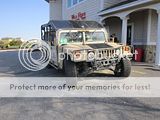
 We are still on the Outer Banks, and today we set out to find the shoreline!  You can be 10 yards from it and not see it.  That's because in the UK we do not build right on the sand.  But here you can build on the dunes in some places and certainly right on the beach, although you may suffer in the hurricane season.  Anyway, it's the day for the Hummer ride to see if we can find some wild horses.  Here's the Hummer.  
 photo Spring2014132.jpg photo Spring2014133.jpg
There are only two seats at the front.  The driver's, and one passenger.  John got that passenger seat because of his nose plugs - the driver wanted to keep an eye on him.  So, two Brits, a party of Texan women who whooo-hoo'd at everything they thought exciting, and a mixture of folk from other parts of the US.  We drove from Corolla town, right up to the end of the tarmac road and straight onto the sand. The Hummer, designed for just this kind of job, took the lumps and bumps well, although smoothest if riding inside the tracks of earlier vehicles.  Sandpipers in huge groups all along the water line, and then - yes, there were horses!
These are referred to as "Spanish Horses", but  our guide told us that the horses come from the Barbary Coast of Africa and are referred to as Barbs.  Whatever, they are not native to the North American Continent.  Have a look at what Wikipaedia says.

There are probably a couple of hundred houses up on the sandbanks, reachable only on foot or in 4x4s.  Most are holiday homes.  Anyway, we did a short tour of those houses, and then continued up on the beach to the Virginia border before driving back 11 miles down the beach seeing more horses, sandpipers and gulls and the end of a wedding party leaving the beach for a knees up in one of the bigger houses along the way.  When we talked to Jessie about our day, she told us she had been the wedding organiser for that one!

Recommendations
Book online in advance for your tour, and give yourself a morning or afternoon.  We were out for 2.5 hours.  You will also need some good sunblock as the vehicles are opensided in many cases and it's easy to burn, especially when you are in a vehicle - as you get the breeze and don't realise how much sun you are also getting.  Oh! and a bottle of water.

After Breakfast next day, we are up and out as we have a long drive along a scenic route I found on the map on our way to New Bern, North Carolina.  But we have one place more to see before we leave the Outer Banks.  We have to drive south a couple of miles to Kitty Hawk.  History buffs - come on!  You should know this name.  Put it together with the Wright Brothers and you will probably remember that the Wrights were flying pioneers.  It was on the Outer Banks that they took their home made glider and then their plane with the little engine, and attempted manned flight.  It is so worth the stop, as in the little information building are full size models of both the glider and the plane.  These guys were self-taught engineers.

The family business was initially bicycle repairs and they went to the Outer Banks on a regular basis, without a backer, and of course there was nothing there bar sand at that time.  They sometimes got so lonely for company they would go on up to the nearest Coast Guard post for a chat.  In December 1903, Orville Wright sent this telegram home to their father:

"Success four flights Thursday morning all against twenty-one mile wind started from level with engine power alone average speed through air thirtyone miles longest 57 seconds inform press home Christmas".

And finally, a call at Outer Banks Hospital, where the lovely Doctor McPherson from Syracuse, NY deflated the balloons and took out the plugs!  Did he like it in the Carolinas?  He sure did - upstate New York is cold and grey every day!!!!   Crossing to the mainland again we take a bridge to Manteo, across Roanoke Island, take the bridge off the island and on to Manns Harbour and down through the National Nature Reserve of Alligator River, North Carolina.
 photo Spring2014135.jpg
No more blood (for now!), and here is Maccers looking pleased as punch that the job will be done shortly.


American Road Trip - Off to the Outer Banks and a real emergency - Part 4


So leaving Liz and Portsmouth, we retrace our steps and head back to Jamestown to see the little fortress and what it looked like inside; talk to a armourer about his weapons, and go aboard the  Susan Constant, the biggest of the three ships that came across from England.  This "mockup" of the first settlement is built on the mainland, not far from the island, and not 500 yards away the three ships sit at anchor.  They too are not the originals, but a lot of work went into making them as authentic as possible.  The biggest is the Susan Constant, a 120 ton merchantman.  The other two were the Godspeed at 40 tons and the Discovery at 20 tons.
Historical Jamestown, VA
Discover in the centre.  Tiny!!


 If I tell you that the Constant Susan is tiny, how small do you think the other two were?  Those passengers headed for the new world would have remained below decks, with no clean clothes, no washing facilities for most of the journey and this ship probably held 70 passengers as well as the crew.  The voyage was via the Canary Islands, over to the West Indies, and then up the coast to Chesapeake bay - a long route but taken because of the prevailing winds.  I listened to a re-enactor on the deck of the Constant Susan, telling another person about how the ship caught the wind and how they learned to use the sails on a ship of this kind.  I heard that it was rare for the passengers to be allowed up on deck for long, and certainly only in very small groups (particularly the men) in case of fighting.  The entire voyage started Dec 20 1606 landed at Chesapeake April 26, 1607.  They'd stopped in the Canaries, and then in the West Indies for food and water, but by the end of the voyage the water could not be drunk, and the food was dried out or mouldy.  No wonder they gave thanks when they stepped ashore.
Susan Constant, Jamestown
The Susan Constant - judge it's size by the crew members shown


So.  We'd learnt a whole new slice of history.  Here in the UK, we really only know about the Mayflower and the pilgrim fathers.  I can't think why we don't know of the Susan Constant, the Godspeed and the Discovery.  But thanks to Alton and John, our hosts in Richmond, we do now.

Recommendation
If you are doing the Historic Triangle, suggest you put aside at least one whole day and wear comfortable shoes!  We spent around 5 hours total at Jamestown alone.

Now, taking the tunnel and the bridge from Newport News Over to Norfolk, we head east again for the Outer Banks, driving alongside the Dismal Swamp Canal for around 30 miles with a quick stop off at the information centre for the Dismal Swamp.  We drive across the bridge at Point Harbour,  onto the Outer Banks and on southwards to our town for two nights, Kill Devil Hills, North Carolina.  It's a surprise to us that this sandbank is so h.u.g.e that we can't see the sea!  Along malls full of shops and supermarkets and restaurants, and we know we are on a sandbank, we know we are on the Outer Banks, but where is the water?!!  From our route down the main road there isn't even a glimpse.  Is it really that wide?  We can't see the Atlantic, and on the inside, we can't see the Curritick Sound, the body of water between the mainland and the Outer Banks either!  But we follow the polite English voice on the GPS and we find the home of Jessie and Denver, and their gorgeous dog Dundee.  We are going to stay with them for 2 nights  but we will need to eat.  Denver says the best place in town, and not on the tourist infested main drag, is the Black Pelican, so after a chat and a quick wash off we go.  It's worth remembering that when any American (or Canadian) says "it's just down the road", it probably isn't.  Distances being so great everywhere, I guess it is just down the road for them, but that description for us Brits probably means no more than one quarter of a mile on foot.  But we found it, and ate well.  We got back just as they were retiring (Jessie works around 70 hours a week, and currently Denver does three jobs.... so a good nights rest is what they need).

We decided that bed was the place for us too but we never got there.  As I was sorting out nightwear, I heard a worried shout from John in the bathroom.  He had a nosebleed of gigantic proportions - the sink looked like a murder scene, and it just would not stop. After about 20 minutes (it seemed much longer) I decided help was needed, and went downstairs just as Denver came out of their bedroom having realised that something was wrong.  He drove us, in our hire car, 5 miles to the hospital, Jessie following behind so that she could drive him home again. The lovely Doctor Valentine and her duty nurse sorted him out by checking everything, attempting to stop it by normal means, then decided that plugs were the answer.  These are inserted before tiny balloons inside are inflated; then they have to stay in place for at least 24 hours plus before being deflated and removed.  Here he is in deep disguise with plugs in place.........
 photo Spring2014134.jpg
The white valves at the ends are locked until the balloons are deflated.  Happy days - but he did need the disguise!


Tuesday, 20 May 2014

American Road Trip - The Historic Triangle - Part 3

Up early, rise and shine!  On the road again and making for Portsmouth Virginia and ever nearer to the coast.  Yesterday's hosts, when told where we were staying next, asked "And you're going to Williamsburg, of course?".  This is where you look coy and don't admit you have never heard of the place......  We looked on the map and it was definitely en route, so why not?  Williamsburg, Jamestown and Yorktown make up the historic triangle as it's known now (good PR guys! Americans love history, and this area is full of it).  Jamestown, Williamsburg and Yorktown Virginia:  that's the triangle.  Jamestown, where the English established their first permanent settlement; Williamsburg, where George Washington, Thomas Jefferson and others conceived a new nation; and Yorktown, where French and American troops under Washington's command forced the surrender of the British and won independence.

We parked the car at Williamsburg, where there is an enormous visitor's centre, an even bigger car park, and several hotels out of sight behind the trees.  Looked around the visitor's centre and asked some questions. Also spent a large-ish amount of money on books in the bookshop (no! really?).  A really good guide book to tell you more about this area,  one about women in the Civil War, and several others of interest.
Williamsburg, the original town, has been rebuilt as it was.  Re-enactors live in the buildings, (those that are not open to the public, because of course behind that door is central heating and TV!) dress as they would have then, and go about their 1700's lives.  You can look in on the tavern see men having a pipe and a pint, you can wander amongst them.  It's a huge site though, and with gardens and farm land laid out, and blacksmiths and other trades there if you are really interested we were told it might take a couple of days to see it all.  We were interested, but could not afford that much time.  So we opted for Jamestown Island, the site of the original settlement.  You can drive a figure of eight around this little island - but only at 15 mph, so it takes some time.   And so it should.  If like us, you go on a warm, sunny day in May, you will be lucky to meet a dozen cars in 2 hours.  You will have your own taste of paradise - and that is what the early settlers believed they had found.  Letters back to England record "heaven on earth"  "great soil for farming"  "truly paradise".  The local North American Natives laughed behind their hands, for they did not live on this island.  In the Spring it was glorious - but swampy areas are great for mosquitoes.... and mosquitoes bring sickness.  However, the new settlers knew nothing of this, and started to build their homes and businesses.


 photo Spring2014098.jpg
just as it would have been - a tree falls, it stays
 photo Spring2014108.jpg
boardwalk bridges on and off the island
 
We drove around the island, stopping at the pull-ins where information boards told us more, and once we parked the car and walked a short way through the trees on a little footpath through the trees to the water's edge, sat on a fallen tree and listened to water lapping and birds shouting (yes, they are
loud!)  It wasn't hard to imagine how those first settlers felt after months at sea.
 photo Spring2014101.jpg
path to the shore

 photo Spring2014103.jpg
A perfect day
 photo Spring2014102.jpg
shoreline
We met some eagle spotters whilst we were there - 5 nests around the island that time, so we got the binoculars out and saw a (huge) baby on a nest!  We talked to those eagle people as another person we met referred to them looking down her nose, about saving the eagles around local airports and how magnificent they were and ..... well you know the sort of thing that fanatics (albeit very nice ones) talk about.  And then onwards, over the boardwalk bridge that takes you off the island and back to civilisation.  Looking at the time, we felt that as we had an hour's drive ahead to get to our next bed for the night, we could stay no longer, but decided that it was too interesting not to see just a little more, so we would drive back the following morning.
 photo Spring2014112.jpg
sitting in the 'burbs, waiting for Liz to come home....
So it was on to Portsmouth (still in Virginia) to stay overnight with Liz in her tiny (probably 1930's) house with her big French Mastiff, Lucca.  When we rang she was still on her way home from work, so we drove two blocks and came to a watery inlet with trees on the shore and houses here and there.  Sat and just enjoyed for 30 mnutes until she was home.  She suggested a nearby gourmet restaurant for dinner, and that's where we went.  Apparently on the current top 10 of the Eastern Seaboard's list of good places to eat.  Eclectic decor (very), and good food.  So you have to try Shrimp and Grits if it's on a gormet menu right? Yum!  Shrimp is actually very large prawn, and grits?  Just cornmeal porridge!  I liked the two together, dressed up for the gourmet with some veg and a thin but very tasty gravy.  John had a pork medley.... just pork prepared several ways on a board, which came accompanied by a bowl of vegetable soup with large chunks of potatoes, mushrooms and other veg.  He cleared the board and the bowl!   Back for a lovely chat about life with our host, a good night pat for Lucca, and then to bed for another early start retracing our steps back to Jamestown.

 photo Spring2014116.jpg
Mr Mac and Lucca
 

Monday, 19 May 2014

American Road Trip - the beginning! Episode 2

And when I say road trip, I mean around 2,500 miles.  If you have any idea how big the US is, you'll know that it wasn't a huge trip!  But for us, it was two weeks on the road, meeting some lovely southern folks, eating lots of shrimp (prawns to UK readers) caught locally; tasting grits for the first time;  finding out that "biscuit" is actually a scone without sugar in the mix - and delicious with bacon and egg for breakfast;  finding out that the Outer Banks (OBX) is massive.  It's so lovely, with two shores - the Atlantic Ocean, and then the sound inside before the coastline proper.  If you love water, sea, sand, sun, boats, seafood and everything that goes with all that, I think you just might like this as a holiday spot.  Because we found so much that was new to us, and met so many great hosts (AirBnB all the way!), I'll have to divide this trip into several chapters.  The nice thing about blogging is that you can churn out pages and no-one is actually obliged to read them unless they really want to!  So go ahead, be our guest, and join us on our trip.

 photo Spring2014091.jpg
Monticello


Our first stop was at Susan's lovely home in Keswick, just above Charlottesville Virginia, about 10 minutes down the road from Monticello, the home Thomas Jefferson had built for himself.  This very small home (considering who he was) is at the top of a hill, with views all around.  It ensures cool breezes in the hot weather, as the temperature is several degrees lower up there. Never mind about what his part was in American history - what a clever chap Mr Jefferson was!  The architecture of Monticello is incredible.  He was a well read man and had been to Europe and incorporated all sorts of ideas into his home, including sliding doors so that rooms used in the summer could be closed off in winter; There's a weather vane on the porch which has a compass at it's base.  The compass is fitted to the porch ceiling, so that you can look out of the window and up into the porch to see which way the wind blows (especially good in winter, as you don't have to step outside!).  Above his bed, which was built into a wall space between his office and his sitting room so that no time was wasted walking to another room, is an open cupboard with large round round windows with no glass.  These are not windows at all, but openings to allow air to circulate - as this space was for clothes to air (don't forget that lots of heavy clothing was not washable, and the only way to get it to smell sweet(ish) again was to air it.  He imported wines from Europe on a regular basis - spending a great deal of money in doing so; he kept slaves even though he was a great supporter of freedom; probably fathered several children by one of his slaves (he was widowed early and never took another wife).  The gardens are laid out just as they were in his time, when we where there in early May they were just planting vegetables.  There is a lot of archaeology on-going too, so things are being found all the time. 
From Monticello, we drove eastwards to Richmond, Virginia, a very large city south of Washingon.  We spent a couple of hours in the late afternoon driving around suburbs looking for somewhere interesting to eat, finding only KFC or other fast food outlets of the same kind.  Eventually we plumped for a cup of coffee, and drove round more suburbs until it was time to greet our hosts for the night, Alton and John.  We could certainly have coped with our daily lunch standby, a handful of crisps and an orange if there was nowhere near,  and of course we could ask our hosts for directions to somewhere decent for the night, but then we were asked had we eaten?!  So a huge platter of chicken wings was seasoned and cooked for us, them, and their lodger.  Delicious, and we sat around the kitchen table for a few hours putting the world to rights.  When they asked where we were going next and we told them, they suggested somewhere we had not even considered.  And for where that was, you'll have to see Episode 3.

Recommended

Take at least half a day to do this visit.  Monticello is guided for you and you join a smallish group at the time printed on your ticket so that you can hear and see everything without a crush.  The gardens can be done with a guide too if you want, and all staff are helpful. You can ask anyone anything.  Don't miss some of Mr Jefferson's books behind glass, and find out why some of them are so small!

Washington DC for just a few days? How to see (almost)everything! Episode 1


We're off!  We promised ourselves a great holiday for our Ruby (40 years) Wedding Anniversary last October, so we planned a road trip in the US.  Our first stop was a three night stay-over with a friend (Hazel and her family) who lives in The Potomac area of Maryland, part of Washington DC's huge suburban area, encompassing whole towns.  From not far from their home we picked up the Metro, the commuter train which, like London's Tube, starts in outlying areas overground, and then goes underground as it approaches the city.  This terminates at Union Station, opened in 1907 - a beauty of a train station, the foyer currently receiving some tender loving care following a 5.8 Richter scale earthquake in the Washington area in 2011.

 photo Spring2014046.jpg
New Gold leaf after repair works.    

 photo Spring2014047.jpg
Painted plasterwork


                                                                                                                                                                    How to see the Capital of the USA in only two days?  Well, you can walk about a lot, as the major stuff is very central, or, like us you can take one of the Hop On Hop Off trolley bus tours - which can't be beat for learning a lot about the city in a very short time.  Every driver knows loads of facts (and a few fictions) about his city.  He can give you so much info sometimes it goes into overload, and I never heard a question from a passenger that could not be answered!  This trolley bus arrangement does three separate loops.  One is the central area which includes Capital Hill, The Washington Monument, every other monument (and believe me, there are a great many) and other interesting points which the driver will tell you all about.

                  
                     photo Spring2014049.jpg 
 photo Spring2014067.jpg     photo Spring2014060.jpg
Two familiar sights, and two unfamiliar I think.... This is referred to as "The Restraint of Commerce", one of two matching sculptures outside the Federal Trade Commission, and one door in that building.
 photo Spring2014050.jpg
                                                      
                                                                                                        The changeover point for another loop is just a few yards from Ford's Theatre, where Abraham Lincoln was assassinated.  The next loop will take you up to that part of town you can't afford!  A bit like Bishop's Avenue in London, but in better taste - and then on down to Georgetown, the original settlement here, down by the river.  So unlike anywhere else in the US I believe - a few streets of very narrow terraced and detached houses separated only by inches; narrow because there was a tax on the width of houses in Georgetown (no wonder Americans don't like taxes - it started so long ago!) and the narrowest is only 9ft wide.  Lots of lovely independent shops and restaurants on the main street, and no Metro connection, because the Georgetown residents are such wonderful snobs, and voted not to have it "out here"! You'll catch a glimpse of the White House on this loop too.  The last loop will take you (amongst other places) to Arlington Cemetery, where Jack Kennedy's eternal flame burns.

The Smithsonian Museum is a blanket term for several museums all grouped in the same area - North American Indian; Art; Natural History; etc etc..... just look it up.  And, at last, a new building to be opened shortly is the African American Museum.  What took them so long?  Our second day we went back again and walked about as much as much as we could.  Some fabulous statuary  -  our favourite,  "Restraining Commerce", is shown above.

For Mr Mac, his crowning moment was when he came across the FBI vehicle parked right outside  FBI's field office (the FBI's HQ offices can be seen from the bus and also on foot, but tours inside were closed some years ago).  He was so excited to see this - and it is huge because of course it arrives at a scene of crime full of equipment, officers and a laboratory.  And computers, of course.  

 photo Spring2014053.jpg                photo Spring2014056.jpg             photo Spring2014054.jpg

We also found the Police Memorial Park, a new park dedicated to every US police officer who has died in the line of duty.  It is the American way, to commemorate and never forget anyone who has died in the line of duty, so soldier sailor, airman, policeman, whatever, there will be a memorial somewhere for them, with every name displayed.

PS - Washington  was designed by a Frenchman - Pierre L'Enfant - along European lines, and it does have a rather European feel about the old streets which are wide and have all the important offices of state housed in their own buildings including The Mint where dollar bills are printed.

Recommendations

The Roti Mediterranean Grill in Union Station where you can choose from many different fillings in a roti bread (like a wrap only smaller and lighter and nicer), or on a plate - vegetarian or meat.  Delicious, and cheap. Try to choose before you get to the counter, especially on weekdays!

Hop On Hop Off Trolley Bus Tours (Book in advance with Viatours on the internet for a good deal).

Walking with a camera and using your eyes to see interesting things

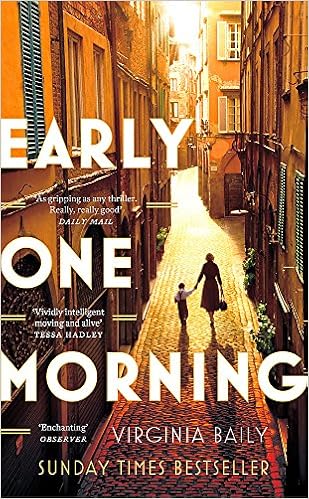
Early One Morning - Virginia Baily

I was attracted to this novel purely by the cover (as I suppose this is meant to happen!) and it has very little about the contents on the b...