I lived in South Wales for three years early in my marriage.... and the feel of the village in which Non, her husband Davey and her three stepchildren live is there, on the printed page. The Welshness of the speech patterns seems just so right, and so too are the descriptions of the characters, making me think, during the early part of the book, of Dylan Thomas's Under Milk Wood.
But whilst Milk Wood might amuse, this book has serious subjects to concentrate on. The returning soldiers who were described as "shell-shocked" then, were actually suffering post traumatic stress - but no-one knew how to deal with them. Davey is one such. He's a coffin maker and carpenter, and appears normal to everyone except Non, who sees him, early every morning, under the kitchen table reliving a certain time in the trenches. Their marriage is physically over - he has told her that he had an affair with a nurse whilst in a hospital recovering from wounds - although as a father and provider he is still present. But Non, with her weak heart since birth, is still only 29. Must this be the rest of her life? She wants Davey back - but how to do that?
The descriptions of every character, from the minor, her youngest step-son Osian (what might be described as an idiot savant now), her lying and jealous mother in law Catherine, and the nosey next door neighbour with constant bowel troubles, to the major - her husband Davey, her friend Lizzy German, and of course herself, Non, make them come alive. I couldn't put it down - and although its not a thriller it has several mysteries satisfyingly cleared up as the story progresses. Also cleverly woven into the story are women's voting rights; the early Labour movement in Wales; the Irish uprising, and the business of how women took care of business whilst men were away at war.
I loved her first novel "The Earth Hums in E Flat", which had a touch of magic realism about it, and the major character was a child; and I love this one too. A Welsh writer to be proud of - and to read!
Thursday, 23 February 2012


Wednesday, 22 February 2012
Tom's Midnight Garden - Philippa Pearce
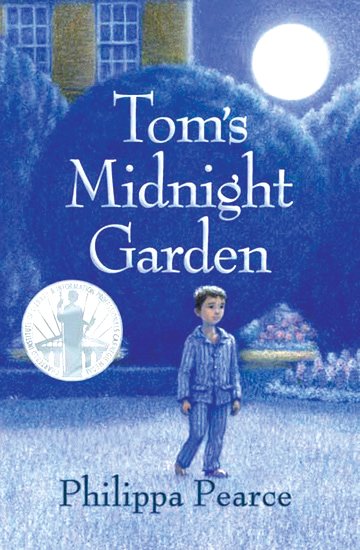 What a lovely, lovely story. Carnagie Medal Winner in 1958, it's year of publication, this has been in print in some form or another ever since. I wish I had a child I could read this to - or a child who would read it and enjoy it as I have just done. Tom's brother Peter has gone down with measles, and it is decided that Tom should be sent off to stay with his aunt and uncle. What a disappointment for him - its the beginning of the holidays, and the brothers had so much planned. So off he goes to a tiny flat in a big house with no garden, and no-one to play with (in any case, he is being kept away from people in case he is developing measles himself). There is no inspiration for him now, the flat looks out onto new houses, there is only a communal yard for the dustbins, and, well, its basically very boring indeed. Until, one night, he hears the grandfather clock in the communal hall strike 13, and a great adventure begins.
Can ghosts go back in time and visit the past? or is the past a ghostly time? Don't be frightened - just go along with Tom and visit the garden of the big house every night when the clock strikes 13, meet Hatty, the most wonderful little girl and playmate, and like Tom, try to imagine some way of stopping time altogether.
Tuesday, 21 February 2012
The Unit - Ninni Holmqvist
 Dystopian novels only work for me if they are believable. In this case I am wondering where the actual unit is situated! Set in a Sweden of the not too distant future, this is what becomes of being a democratic country whose government has voted for what's best for everyone (well, everyone outside the unit). The Unit is the Second Reserve Bank Unit for Biological Material and they "......will be glad to assist you in becoming a more productive and valuable member of society from the beginning our your stay, through to your final donation...".
 The narrator is Dorrit Weger, who is checked in to the unit on her fiftieth birthday - and no, there is no choice if you are single, a non-parent, a non-carer, not a brilliant writer, artist, etc or with a job in an industry that needs you. Dorrit has given up her little house, given her beloved dog Jock away to neighbours with small children who love him, and has arrived inside the unit where she finds she has a small flat of her own, which she can do as she likes with, and decorate as she wants. The unit has cafes, theatres, gardens, galleries; in fact it seems rather like a cruise ship to me - but a last cruise is the trip you are taking with Dorrit. In the calm atmosphere of the unit, Dorrit soon makes friends, and takes a lover, knowing all the while that at some point she must make her final donation for the good of society.
The sentences are short, there are never too many words used, and the cool, Scandinavian feel of the place stays with me. That coolness begins to leave a nasty feeling when you realise that in a world of overcrowding, and elderly people living longer and costing money, this might be the ideal solution for governments to take. In at 50 for women, 60 for men, and there to help society......... compulsorily. It does not take a great leap to imagine that in the not too distant future, with pension pots running out, hospitals keeping elderly people alive at enormous expense, those without jobs costing the rest of the population a great deal; this might come up as a lightbulb moment at the desk of a senior civil servant. It will stay in my mind for a long time, it's a brilliant but haunting novel.
Monday, 30 January 2012
All That I Am by Anna Funder
All That I Am is a novel using existing records and real people. I knew little of the period from 1918 until Hitler became chancellor, and I certainly knew nothing of Bavaria declaring independence from Germany in 1919.
This was a slow burner for me. I wasn't going to give up on it, but it took a few chapters for me to settle to it. But when I did, Oh!, what nuggets of research were there, laid out for me, brilliantly. There are two story tellers in this book. Ernst Toller, playwright, who died in exile in New York in 1939 - having served a prison sentence for being the leader (for a few days) of the Bavarian government; And Ruth Wesemann, who died in Australia early in the 21st century. The chapters alternate, but they are headed by character name, so it is easy to know who is telling the tale. But it really is the story of Dora Fabian that these two friends are telling - Dora, the love of Toller's life, and Dora, the cousin and closest friend of Ruth. Dora, who died because she could not stand by and leave the truth aside. The bravery of those German Jews who were desperate to tell the German people what was happening as Hitler made his play for power, and who were not safe even in London from the long arm of the Gestapo, is the reason for reading this book, that, and to pick up that little lost strand of history. The words are in English, but you will be able to see how different the German owners of the voices were from the English of that time.
A book that has no pleasant subject, but a book that should be read slowly, so that all the facts sink in. If we just change the name of Germany to an invented country such as Rhinetopia, it would be easy to describe this as a brilliant dystopian novel. Except that the dystopia is real, and the facts are there for the finding. A book that stuns the reader into taking notice.
(copy of my Amazon Vine review)
This was a slow burner for me. I wasn't going to give up on it, but it took a few chapters for me to settle to it. But when I did, Oh!, what nuggets of research were there, laid out for me, brilliantly. There are two story tellers in this book. Ernst Toller, playwright, who died in exile in New York in 1939 - having served a prison sentence for being the leader (for a few days) of the Bavarian government; And Ruth Wesemann, who died in Australia early in the 21st century. The chapters alternate, but they are headed by character name, so it is easy to know who is telling the tale. But it really is the story of Dora Fabian that these two friends are telling - Dora, the love of Toller's life, and Dora, the cousin and closest friend of Ruth. Dora, who died because she could not stand by and leave the truth aside. The bravery of those German Jews who were desperate to tell the German people what was happening as Hitler made his play for power, and who were not safe even in London from the long arm of the Gestapo, is the reason for reading this book, that, and to pick up that little lost strand of history. The words are in English, but you will be able to see how different the German owners of the voices were from the English of that time.
A book that has no pleasant subject, but a book that should be read slowly, so that all the facts sink in. If we just change the name of Germany to an invented country such as Rhinetopia, it would be easy to describe this as a brilliant dystopian novel. Except that the dystopia is real, and the facts are there for the finding. A book that stuns the reader into taking notice.
(copy of my Amazon Vine review)
Wednesday, 18 January 2012
Wintering by Derek Johns
Somerset, around 1958, and here is recently bankrupt Jim; desperately sorry for himself, having lost the business, the house, its contents and the car. He and his wife Margaret, and two children, Billy and Sarah, are living in a farm cottage with hardly anything in it, their only entertainment a radio which Margaret managed to hide from the receivers. School is the village school, not like the big school in the big town at all, and Jim has to cycle 4 miles each way to Wells for work (a non-position offered by his wife's uncle) and is trying to stay on the straight and narrow. The waitress at the local cafe catches his attention........ The people they meet, those who help and those who don't, from the seedy Towker to the eccentric Leonora with her dirty house and 32 cats, are described here quietly and beautifully.
This is truly a little gem where less is more. Not a word wasted, and yet you feel and see and experience all the feelings described. Not for those who enjoy being frightened or thrilled, but a definite must read for those who love a well written novel. Less than 200 pages and a joy to read.
(copy of Amazon review)

Saturday, 7 January 2012
The Unlikely Pilgrimage of Harold Fry by Rachel Joyce
Harold Fry is a just-retired, very unhappy man, in a dead marriage, when he receives a letter from the other end of the country. A former colleague is in a hospice and she writes, just to touch hands, to tell him she is terminally ill. Harold writes a short reply, puts on his jacket and sets off for the post box - and finds he can't let go of the envelope. So he walks to the next post box, and the next, and suddenly, he has made up his mind that he will walk from South Devon to Berwick on Tweed, to say goodbye to Queenie, in the clothes he stands up in, a pair of boat shoes, and no mobile phone. Harold and his wife have been estranged for 20 or more years. During this long walk to Berwick she thinks again about their life together, and Harold thinks about his entire life, and what made him who he is.
I couldn't find a flaw in this novel. Harold is a man who you sympathise with, he is drawn so beautifully. Maureen, the wife left behind is cold, calculating, sharp-tongued, but also deeply hurt. During the walk you will find out why Harold is walking, why Maureen is so bitter, and you will find that you are cheering him on, not only for the walking, but for the fact that he does not want to let go of his marriage either. The characters met along the journey are also beautifully drawn and its not hard to conjure up the picture of each of them in your head. The chapters are not long, in fact sometimes just two pages, and each of the major characters is coaxed out of the first impressions so skillfully you just need to keep turning the pages. I will always keep with me the thought of one of the characters that "life .....is a slippery bugger...." It is, but Rachel Joyce has grasped Harold's life and in doing so has given us an astounding first novel.
(copy of my Amazon Vine review)
I couldn't find a flaw in this novel. Harold is a man who you sympathise with, he is drawn so beautifully. Maureen, the wife left behind is cold, calculating, sharp-tongued, but also deeply hurt. During the walk you will find out why Harold is walking, why Maureen is so bitter, and you will find that you are cheering him on, not only for the walking, but for the fact that he does not want to let go of his marriage either. The characters met along the journey are also beautifully drawn and its not hard to conjure up the picture of each of them in your head. The chapters are not long, in fact sometimes just two pages, and each of the major characters is coaxed out of the first impressions so skillfully you just need to keep turning the pages. I will always keep with me the thought of one of the characters that "life .....is a slippery bugger...." It is, but Rachel Joyce has grasped Harold's life and in doing so has given us an astounding first novel.
(copy of my Amazon Vine review)
Monday, 5 December 2011
Died then Dried - can Shermouse Holmes lift his flagging career?
Just when we thought this story all but over, your reporter has received another call from Mr Holmes. It seems that another victim has been found at Pine Tree Cottage. One of the big ones was vacuuming behind the woodburner getting the room clean and tidy for visitors (why do big ones do that? why don't they keep their nests clean and tidy all the time?) when it appeared that there was something stuck on the end of the nozzle of the cleaner. A small fieldmouse, very dead, and very dessicated too was found. She switched the infernal machine off (although in fact it was not this which caused the death) and collected the mumified body and dropped it into her rubbish disposal box! Not even a decent burial! And how do we know this, readers? because Bob, the postmouse - pictured here returning to the local pub, "The Ear of Corn", for a small barley wine after his ardous task of delivering the post, glanced in through the window and slammed the brakes on at the sight he saw!
He called Shermouse Holmes straight away, as of course only seeing the body, and not knowing that it was dried out, thought that this was a new murder! A new case for Holmes then, but not a new murder - rather, an old murder! So Shermouse Holmes is now investigating whether the mouse in question was murdered or died of natural causes (which is what they call a heart attack - although it would be better if all concerned understood that being frightened to death should be called murder under Mouse Law) and again, he will report to this newspaper with any news. Will the mayhem never end? Will Shermouse Holmes every regain his reputation? Was the postmouse telling the truth? Only your intrepid reporter will be able to answer these questions........
|

Subscribe to:
Posts (Atom)
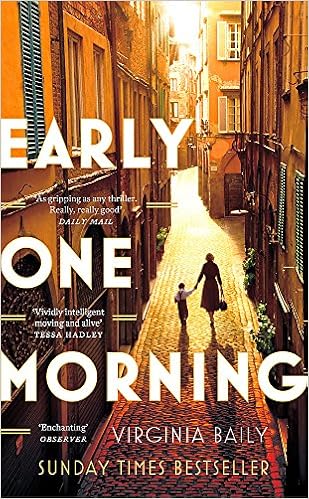
Early One Morning - Virginia Baily
I was attracted to this novel purely by the cover (as I suppose this is meant to happen!) and it has very little about the contents on the b...
-
 This is our spare room. It was a glory hole with a bed in it and way too much furniture before the makeover. Now its so nice I wish it was ...
 -
I was attracted to this novel purely by the cover (as I suppose this is meant to happen!) and it has very little about the contents on the b...
-
 Hasn't mother nature given us here in the UK a lovely gift of a month of glorious weather? More like June than April? All I know is ...
